LinkedIn Content Strategy for Women-in-AI Founders | Netwarm
LinkedIn playbook · Case study
LinkedIn content strategy for women-in-AI founders: how a San Francisco AI career founder reached 110 founders and business leaders in 3 weeks
We read every reaction on 11 posts from a San Francisco founder building an AI career platform for women. 456 people, 110 founders and business leaders. Here is what brings buyers, what brings peers, and the 5 posts we'd publish next.
Max Sawyer · Netwarm··11 min read
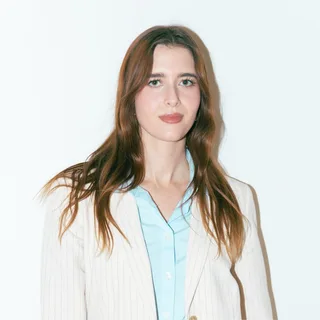
The creator in this case studyA San Francisco founder building an AI career platform for women
Followers36,301
Posts~4 a week
Sells
These numbers are from 3 November. Your audience has already moved.
New founders and business leaders turn Hot every week and others go quiet. Run your free scan to see today’s version, with the names.
Ruth, an AI career platform that helps women build personal brands, negotiate salaries and navigate their careers; AI for Social Good hackathons with brand partners; sponsored creator content
PeriodOct 14 – Nov 3
Ideal client: founders, tech and AI leaders and partnership heads who can sponsor, partner with or invest in a platform built for women's careers.The challenge: The founder hosts hackathons, dinners and receptions across cities while building a company, and wrote that “so much of the job involves simply getting back to people”: emails, LinkedIn messages, DMs and group chats, where “it is easy for messages to get buried.” With hundreds of conversations going at once, which readers deserve the first reply?
Key takeaways
1 in 4 readers is a founder or business leader.110 founders, CEOs, presidents, directors and partnership leads reacted in 3 weeks: 24.1% of everyone who reacted, next to 110 creators, marketers and students.
Hackathon invites bring almost 2x more founders than partner posts.27% founders and business leaders on the event invites, 14% on the sponsored partner posts. The first NYC invite alone reached 29%.
6 founders and business leaders are Hot right now.They reacted to 5 posts or more. One of them reacted to 9 of the 11.
01
Who actually reads you, and what the LinkedIn algorithm changed
The founder posts about four times a week: invites to the AI for Social Good hackathons, the judges and the recap, life as a founder on the road, and a few sponsored partner posts. 11 own posts between 14 October and 3 November, most of them published between 6 a.m. and noon Pacific.
The LinkedIn algorithm shows a post to the people who reacted to the last ones, then to people like them. A founder who hosts events for women builders draws a wide crowd: the builders and students who apply, the creators and marketers who cheer, and the founders and leaders who could sponsor the next event or partner with the company. Reach can't tell them apart. Who reacted can. We looked at every person who reacted and sorted them by role.
11posts in 3 weeks
456people reacted
110founders and business leaders
14came back 3+ times
Audience by roleThe 456 people who reacted, by roleFree
Founders and business leaders are 110 people, 1 in 4: startup founders and CEOs, presidents of small companies, directors and VPs at tech firms and banks, and heads of partnerships and ecosystem programs. Peers are just as many: 110 content creators, personal branding and LinkedIn specialists, marketers, students and interns. They push reach, and they rarely sponsor an event or sign a partnership.
Everyone else is half the audience: engineers, analysts, recruiters and people early in their careers, many of them the women the platform is built for. They matter for the product. For partnerships and sponsors, the 110 are the ones to know by name.
SeniorityAll people who reactedFree
Founder, owner, C-level22.4%
Director, VP5%
Manager10.5%
Independent4.6%
Other57.5%
IndustriesFounders and business leaders onlyNetwarm
AI and tech companies38.2%
Hidden in preview00%
Hidden in preview00%
Hidden in preview00%
See all industries and company sizes in your free scan.
Core audience14 founders and business leaders engaged 3+ times · 6 engaged 5+ timesNetwarm
14 founders and business leaders keep coming back. One of them reacted to 9 of the 11 posts.See your regulars
Engager company sizeEveryone who reacted, by company sizeNetwarm
Hidden in preview00%
Hidden in preview00%
Hidden in preview00%
Hidden in preview00%
Hidden in preview00%
See which company sizes your founders and business leaders work at.See company sizes
02
What to post on LinkedIn to reach founders and business leaders
Most founders judge a post by its reactions. A founder looking for partners and sponsors should judge it by who reacted.
We tagged each of the 11 posts by topic, then measured the share of founders and business leaders among the people who reacted. Comments were not counted.
Your topicsWhat your 11 posts were aboutFree
11posts
Hackathon invites4
Founder life stories3
Hackathon judges & recaps2
Partner posts2
Topics that attract founders and business leadersShare of each topic’s reactions from founders and business leadersNetwarm
Hackathon invites27.0%
Hackathon judges & recaps19.3%
Founder life stories19.1%
Partner posts14.0%
One topic brings almost 2x more founders than another. See which.See which topics
Invites to the hackathons bring almost 2x more founders and business leaders than the sponsored partner posts: 27% against 14%. They also reach more of them per post: 18.2 against 8.5.
Posts that brought the most founders and business leadersShare of founders and business leaders in each post’s reactions1 of 5 open
#1New York, come see what women are building29.2%
#2400 women applied to be builders at our NYC hackathon28.6%
#3Los Angeles, we’re looking for 50 women ready to build24.6%
#4New York, come see what 50 women can build in a day24.5%
#5One of my favorite things about working for myself21.4%
For comparison, the behind-the-scenes partner post reached 11.1% founders and business leaders: 5 of 45 people.
6 rules for LinkedIn engagement from founders and business leaders
These rules come from what worked on the founder's own profile, and from the best-performing posts by women founders, AI educators and women-in-tech voices on LinkedIn over the last 3 months.
1
Invite them into the room. A post that opens with a city and an invitation (“New York, come see…”) speaks to the people who could sponsor, judge or partner, not only to the builders. Founders react to rooms they might want to be in.On this profile: the 4 hackathon invites reached 27% founders and business leaders, the highest of any topic.
Lead with the number that proves demand. “400 women applied for 50 spots” tells a sponsor in one line that the community is real and growing. Put the number first, the thank-you after.On this profile: the “400 women applied” post brought 24 founders and business leaders, the most of any invite (28.6%).
Tell one woman's build story, start to finish. The biggest posts about women founders follow one person: the problem she saw, the doubt, what she built, the number at the end. The builders at the founder's hackathons are that story, already happening.Across the niche: a single founder profile, from a friend's loss to a $1.7 billion company, drew 3,761 likes and 128 comments.
Name what you saw in the room. One concrete detail from an event (who was there, who wasn't), then the data behind it. Leaders react to an observation they can repeat in their own meetings.Across the niche: a post that started with the bathroom lines at a tech conference, then the gender pay gap figures, drew 483 likes and 103 comments.
Flip the stereotype with your own wishlist. Quote the lazy idea of what women want from AI, then answer with a list of what women actually need: pay, promotions, negotiation. It is the company's mission in one post.Across the niche: “Apparently, women want AI to help us pick outfits and plan parties” drew 2,725 likes and 250 comments.
Say why you build, in one personal line. The sponsored posts reached the fewest founders. A personal reason behind the work (where you started, why these events exist) gives partners something to believe in, not something to buy.On this profile: partner posts reached 14% founders and business leaders. Across the niche: an AI educator's story of hosting a hackathon at Harvard Business School drew 2,190 likes.
When founders and business leaders read: the best time to post on LinkedIn for women-in-AI founders
We compared the share of founders and business leaders by the day each post was published (Pacific time). With 11 posts, most days have only 1 to 4 posts, so read the gaps as hints, not laws. No 2-hour slot had 3 posts or more, so we don't rank hours.
Share of founders and business leaders by posting dayAmong the people who reacted to each postFree
22.4%
Tue
21.1%
Wed
17.4%
Thu
11.1%
Fri
22.8%
Sun
Tuesday brought the most founders and business leaders in total: 77 across 4 posts (22.4%). Wednesday came next with 52 across 3. Sunday shows a similar share on 2 posts; the one Friday post, a partner post, reached 11.1%.
Keep the rhythm of about 4 posts a week. Put the invites and the build stories on Tuesday and Wednesday mornings, around 8 a.m. Pacific, and keep sponsored posts away from those slots.
05
5 posts ready to publish to target founders and business leaders
Each post follows the rules above, in the founder's voice. Swap in your own details before posting: the real story from the room is what makes it land.
1Ready to postEvent recap + invite
What 55 women built in one day at Google NYCRules 1 and 2: the number first, the projects as proof, then the invitation to the next room. Modelled on the “400 women applied” post.
Hook
55 women. 11 teams. One day at Google NYC. Here’s what they built. 💜→ KinSight, a scam detector that protects older adults from callers pretending to be family. It took 1st place and $10,000 in Gemini credits.
→ em.care, one place for your health at every phase of life: appointments turned into clear next steps, notes, moods and insurance.
→ beniFIT, a helper that finds the benefits you already pay for and never use.
→ City Walk, safer walking routes at night, built on lighting, incidents and open businesses.
→ Pip, a “Duolingo for AI literacy” where kids learn to spot deepfakes and scams.
→ Myops, a voice tool that helps students find scholarships without selling their data.
→ Ira, a financial literacy app for young women, from the first paycheck to investing.Many of these teams met for the first time that morning.This is why I host these hackathons. Not to talk about women in AI. To watch women build it.On November 13, we’re bringing the series to Los Angeles with Google.If you lead a team or a company that wants to be in the room for the next one, as a judge, a mentor or a partner, I’d love to hear from you.Which of these would you use first?
Visual · CarouselOne slide per project: the team on stage, the project name, one line on what it does. Last slide: the LA date.Check before postingCheck each team is happy to be featured, and tag them in the first comment.
In 5 hours, they built a scam detectorRule 3: one team's build story, start to finish, the way the best women-founder profiles are told. Modelled on Jenny Stojkovic's founder stories.
Hook
Think of your parents getting a call from someone who sounds exactly like you, asking for money.That was the problem one team picked at our AI for Social Good Hackathon with Google in New York.They didn’t start by building. They spent most of the morning arguing about which problem was worth solving: women’s health, domestic violence, safety. Then they landed on the one that keeps a lot of families up at night.In 5 hours they:→ trained a model on real authority contact data
→ used the Gemini API to check who is really calling
→ added a way to alert a trusted family member before anyone sends money
→ made it learn from every new scam number it catchesBy the evening, KinSight worked. It took 1st place and $10,000 in Gemini credits.What stays with me is what one of them said afterwards: now that building is easy, staying lean is non-negotiable. Every no got them closer to something worth building.This is what happens when you give women a room, the tools and one day.Who do you know who should be in the next room? 💜
Visual · Single imageThe KinSight team on stage holding their award, with the app's alert screen inset.Check before postingAsk the KinSight team before posting and tag them in the comments; keep the quote as they wrote it in their own post.
Why I host hackathons inside Google's buildingRules 4 and 6: one detail from the room, then the personal reason behind the events. Modelled on Aishwarya Srinivasan's Harvard hackathon story.
Hook
People ask me why our hackathons happen inside big company buildings. Here’s the real reason.It’s a lot easier to picture a career somewhere once you’ve actually walked through the door.So many talented women never get past the lobby of the companies shaping AI. Not because they aren’t good enough. Because nobody ever invited them in.At our last hackathon in New York, nearly 400 women applied for 50 spots. For some of them, it was their first time inside Google. By the evening, they were pitching what they built to a full room.That’s the part the photos don’t show:→ the builder who applied from a painting retreat in Spain after watching our first event from the audience
→ the marketer who brought a storyteller’s eye to an AI build
→ the teams who walked in as strangers and left as co-founders of an ideaAI is going to change how we work and how much we earn. Those benefits won’t be shared equally by accident.So we keep opening doors, one building at a time.Which door opened your career?
Visual · Single imageA wide shot of the builders walking into the building in the morning, before anyone knew each other.Check before postingUse your own details from the room: swap in the builder stories you know best, and check the people you describe are fine with it.
What women actually want from AI at workRule 5: quote the stereotype, answer with the mission. Modelled on Elena Verna's “bigger wishlist” post, with the figures from the Fortune op-ed.
Hook
Apparently, AI for women means help with outfits and dinner plans. Here’s what I actually want it to do.→ Tell me what my role pays before I walk into the negotiation.
→ Write the email asking for the raise I’ve been putting off.
→ Remind me of every win from this year before my review.
→ Help me show up as a leader on LinkedIn, not just as a hard worker.
→ Spot the promotion I should be applying for before someone else does.Women are 16% less likely to use AI at work. Among Gen Z, 71% of men use AI weekly, against 59% of women.These are 40-year careers being shaped right now. Every big technology shift has followed the same pattern: men adopt faster, the gap compounds, women lose ground they never recover.Many women leave up to $1,000,000 on the table over their careers.AI doesn’t have to repeat that cycle. But it will, unless someone builds for women by design.That’s why we’re building Ruth. 💜What would you add to the list?
Visual · Single imageTwo columns: “What they think we want from AI” (outfits, parties) vs “What we actually want” (the five arrows).Check before postingCheck the AI-use figures match the latest version of your Fortune op-ed before posting.
5 prompts to prepare your next salary conversationThe lead magnet below, offered in a post: prompts women can use tonight, the same help Ruth gives. Modelled on Andrew Bolis's interview prompts post.
Hook
Most women walk into a salary conversation with a number they picked the night before.Then they go lower, because it felt “reasonable.”Many women leave up to $1,000,000 on the table over their careers. A lot of it is lost in conversations like that one.Here are 5 prompts to prepare for yours:1. “Act as a compensation expert. What is the pay range for a {job title} with {years} years of experience in {city}? Give me the low, the middle and the top.”2. “Here are my wins from this year: {list}. Turn them into 3 results my manager can repeat to their boss.”3. “Write the email asking for a meeting about my compensation. Confident, warm, under 100 words.”4. “Play my manager. Push back on my ask with the 5 most common objections, one at a time, and coach my answers.”5. “If they say no to the raise, what else can I ask for? List 8 things, from title to budget to learning.”You deserve to walk in with a plan, not a guess. 💜I put all 5, plus the scripts for the hardest moments, into a free guide. Comment “RAISE” and I’ll send it to you.
Visual · CarouselOne prompt per slide, in a chat-bubble style. Last slide: “Comment RAISE for the full guide.”Check before postingPut your Netwarm Reveal link on the guide so you can see which founders and leaders download it, not only who comments.
Free forever: unlimited scheduling through LinkedIn’s official API, with images, video and PDF carousels.
06
LinkedIn lead generation: lead magnets that work to target founders and business leaders
Reactions show interest. A download shows intent. The fastest way to find out who is serious, among the women who need the product and the leaders who could back it, is to give them something useful and see who takes it.
In careers, AI and women-in-tech content, these formats get the most requests:
Format 1The comment-for-guideOne detailed guide, offered for a one-word comment, tied to a live event so it feels urgent.
Format 2The prompt packReady-to-copy AI prompts for one career moment (interview, raise, review), shown in the post and bundled in the download.
Format 3The program giveawayFree access to a paid career program for one winner, entered with a comment (“For me” or “For someone else”), or a private DM.
Our pick for you: “The salary conversation guide”Built from what Ruth already does (helping women negotiate salaries and build their brand): the 5 prompts from post 5, plus scripts for the hardest moments of a raise conversation, on a few pages. Offer it at the end of post 5 with “Comment RAISE”, and use the downloads to see which founders and leaders are paying attention too.With a Reveal link, every person who downloads it is shown by name, with their role and how warm they are. Your first Reveal link is free.Create your free Reveal link
07
From reactions to clients
Content brings founders, tech leaders and partnership heads to the profile. It doesn't say when to reach out. Most never comment, so they stay invisible in a founder's crowded inbox, and a leader who read every hackathon post in October may have sponsored someone else's event by spring.
On LinkedIn, the right moment to start a conversation is when someone keeps coming back. We call that Hot: 5 or more points over 90 days, where a reaction counts 1, a repost 2, a download or a reply 4.
Hot right now6 founders and business leaders · not contacted yetNetwarm
6 founders and business leaders are Hot. See who to message first.See who’s Hot
First messageAn opener for each Hot person, based on the posts they readNetwarm
Hi Jordan, you've been following the hackathon posts for a few weeks. Would your team want to be in the room in Los Angeles, as judges or partners?Hi Sam, I saw you reacted to the post on what 55 women built at Google. Is supporting women builders on your plans for next year?
A first line for each of them, ready to send.See the openers
Netwarm sends nothing for you. It tells you who and when, and you write the message. It also works inside Claude and ChatGPT: ask “Who's Hot today?” and get the list.
08
FAQ
Invitations into the room, the number that proves demand, and the stories of the women who build. Here the hackathon invites brought almost 2x more founders and business leaders than sponsored partner posts: 27% against 14%.
For this founder, Tuesday brought the most founders and business leaders in total (77 across 4 posts), and Wednesday came next. Mornings around 8 a.m. Pacific are a good default.
This founder posts about 4 times a week, and 14 founders and business leaders came back 3 times or more in 3 weeks. Four strong posts beat seven where sponsored content crowds out the mission.
Look at who reacts, not how many. Group reactions by role, measure the share of your ideal partners per post, and follow the people who keep coming back. A free Netwarm scan does this for you.
Yes. Netwarm only reads public reactions to your own posts. It never logs in as you, never asks for your password, and never messages anyone for you.
How we made this playbook
We read the public reactions on 11 own posts published between 14 October and 3 November 2026 (the first 100 reactors of each post), and sorted the 456 people by role. Posts written by other people about the hackathon were left out. Comments were not counted, so engagement figures are a floor.
Niche rules come from top posts by women founders, AI educators and women-in-tech voices over the last 3 months. Role groups are approximate, and some founders are also creators; a Netwarm scan matches people to your own ideal client.