LinkedIn Content Strategy for Fractional CMOs | Netwarm
LinkedIn playbook · Case study
LinkedIn content strategy for fractional CMOs: how a Maine marketing consultant reached 94 founders and executives in 6 weeks
We read every reaction on 26 posts from a Maine fractional CMO and children's book author. 514 people, 94 founders and executives. Here is what brings buyers, what brings peers, and the 5 posts we'd publish next.
Max Sawyer · Netwarm··11 min read
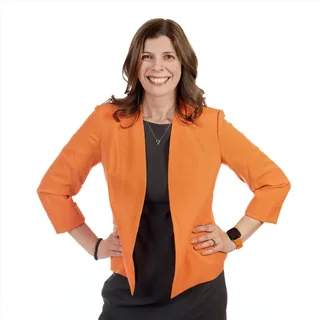
The creator in this case studyA Maine fractional CMO and children's book author
Followers15,891
Posts~5 a week
SellsFractional and interim CMO work, marketing diagnosis, strategic marketing plans, brand frameworks and KPI dashboards
These numbers are from 6 November. Your audience has already moved.
New founders and executives turn Hot every week and others go quiet. Run your free scan to see today’s version, with the names.
Ideal client: founders, CEOs and marketing leaders of multi-brand and multi-location companies whose marketing feels scattered.The challenge: The consultant writes about women in leadership, working parenthood, AI, dogs, "and sometimes even marketing". The audience is warm and loyal. The question is which of those posts reach the people who would hire a fractional CMO.
Key takeaways
Almost 1 in 5 readers is a founder or executive.94 of the 514 people who reacted in 6 weeks: 18.3%. Coaches, consultants and other independents were 140.
AI posts reach 9x more buyers per post.4 AI and tech posts brought 40 founders and executives, about 10 a post. 9 marketing lessons brought 10, about 1 a post.
3 executives keep coming back.They reacted to 7 or more of the 26 posts. One of them reacted to 8.
01
Who actually reads you, and what the LinkedIn algorithm changed
The consultant posts about five times a week, in a voice readers recognise at once: Fat Bear Week, a puppy's first trip to L.L. Bean, AI news, the election, and the odd marketing lesson. 26 posts between 28 September and 6 November.
The LinkedIn algorithm shows a post to the people who reacted to the last ones, then to people like them. A personal feed builds a warm, loyal audience. It doesn't say whether the people who'd hire a fractional CMO are in it. Who reacted does. We looked at every person who reacted and sorted them by role.
26posts in 6 weeks
514people reacted
94founders and executives
3came back 7+ times
Audience by roleThe 514 people who reacted, by roleFree
Founders and executives are 94 people, almost 1 in 5. Peers are the bigger group: 140 coaches, consultants, fractional leaders, authors and creators. They are warm, they share, and they rarely hire a fractional CMO.
More than half of the audience is everyone else: managers, specialists, analysts, people who simply enjoy the dog and family posts. That is the reach. The 94 are the pipeline.
SeniorityAll people who reactedFree
Founder, owner, C-level16.1%
Director, VP8.4%
Manager10.3%
Independent11.9%
Other53.3%
IndustriesFounders and executives onlyNetwarm
Marketing, brand, creative and communications35.1%
Hidden in preview00%
Hidden in preview00%
Hidden in preview00%
Hidden in preview00%
See all industries and company sizes in your free scan.
Core audience3 founders and executives engaged 3+ times · 3 engaged 5+ timesNetwarm
3 founders and executives keep coming back. One of them reacted to 8 of the 26 posts.See your regulars
Engager company sizeEveryone who reacted, by company sizeNetwarm
Hidden in preview00%
Hidden in preview00%
Hidden in preview00%
Hidden in preview00%
Hidden in preview00%
See which company sizes your founders and executives work at.See company sizes
02
What to post on LinkedIn to reach founders and executives
Most consultants judge a post by its reactions. A consultant who sells should judge it by who reacted.
We tagged each of the 26 posts by topic, then measured two things: the share of founders and executives among the people who reacted, and how many of them each post brought.
Your topicsWhat your 26 posts were aboutFree
26posts
Marketing and business lessons9
Dogs and family life7
AI and tech4
Politics and women in leadership4
Memes and pop culture2
Topics that attract founders and executivesShare of each topic’s reactions from founders and executivesNetwarm
Dogs and family life21.5%
Politics and women in leadership19.7%
AI and tech18.8%
Marketing and business lessons15.9%
Memes and pop culture12.5%
One topic brings 9x more founders and executives per post than another. See which.See which topics
The share of executives is close on every topic, from 15.9% to 21.5%. Reach is not: AI and tech posts brought about 10 founders and executives each, marketing lessons about 1.
Posts that brought the most founders and executivesShare of founders and executives in each post’s reactions1 of 5 open
#1Fat Bear Week: a mama bear and her 3 cubs26.1%
#2OpenAI found models passing jailbreak notes to the next version23.7%
#3Women won up and down the ballot22%
#4Haunted House. Parenting Edition.20%
#5We must overturn Citizens United19%
Among posts with 10 or more reactions. For comparison, the IFYKYK meme reached 7.3% founders and executives, the lowest share.
6 rules for LinkedIn engagement from founders and executives
These rules come from what worked on the consultant's own profile, and from the best-performing posts by brand strategists and marketing leaders on LinkedIn over the last 3 months.
1
Start from a scene everyone has lived, end on the marketing lesson. The vet with the spray cheese is the best example on the profile: a dog story first, then “Remove the worst part of the experience and people will drive past your competitors.” Readers come for the scene and leave with the lesson.Across the niche: Noemi Kis' tiny-oven cookie story, one brand and one lesson, drew 835 likes and 191 comments.
Take a clear side on the AI news executives already discuss. AI is what founders and executives argue about this year. A sharp take from a marketer who has run 150+ brands is a reason for them to follow.On this profile: 4 AI and tech posts brought 40 founders and executives, about 10 a post. 9 marketing lessons brought 10.
Pick a fight with a habit, in the first line. “Hills I will die on: not every business needs to track a Net Promoter Score” is the right opener. Executives react to an opinion they can agree or argue with.Across the niche: Sharanbir Kaur's “Do not hire a marketing head if you do not have a marketing budget” drew 1,224 likes and 222 comments.
Break down one real ad in three lessons, not one line. Sharing a clever ad with “Brilliant marketing” leaves the thinking to the reader. Three lessons a marketing leader can reuse show how a fractional CMO thinks.On this profile: the ad shared with one line of text got 4 reactions.
End on a question anyone can answer from their own week. “What would you outsource to the robots?” is easy to answer in one comment. Easy questions bring the people who never post.On this profile: the robots post got 378 reactions, and 18 founders and executives among the first 100 read.
Name your buyer in the first two words. “Nonprofit marketing peeps:” already works on the profile. “Founders:” or “Marketing leaders:” tells the right people the post is for them before the scene starts.Across the niche: Noemi Kis' “Founders: this is a genius marketing move” drew 835 likes and 191 comments.
When founders and executives read: the best time to post on LinkedIn for fractional CMOs
We compared the share of founders and executives by the day and the hour each post was published (Eastern time). Hours are shown only where 3 or more posts went out.
Share of founders and executives by posting dayAmong the people who reacted to each postFree
26.4%
Mon
18.8%
Tue
18.1%
Wed
12.9%
Thu
23.6%
Fri
13.3%
Sat
12.7%
Sun
Best time to post, by hourShare of founders and executives among people who reactedFree
20.3%
8:00
23.5%
12:00
17.7%
18:00
17.8%
20:00
Monday brought the highest share of founders and executives (26.4%), then Friday (23.6%). Thursday and the weekend brought the lowest, around 13%.
Keep business posts (the AI take, the ad breakdown, the lead magnet) for Monday, Tuesday and Friday mornings or lunchtime. Keep the dog, hockey and family posts for the weekend: they keep the audience warm.
05
5 posts ready to publish to target founders and executives
Each post follows the rules above, in the consultant's voice. Swap in your own details before posting: the real story is what makes it land.
1Ready to postScene to lesson
The store that let a puppy ride the elevatorRule 1: a scene everyone has lived, ending on the marketing lesson. Modelled on the Cheez Whiz vet post.
Hook
Our puppy rode the elevator at L.L. Bean twice. Nobody asked us to leave.They scratched his ears. They said hello. A staff member asked his name and used it.He had the time of his life.So did my kids.We bought nothing that night.We will be back this weekend. And we will buy something.That's the whole marketing lesson.The brands that win are not the ones with the biggest ad budget.They are the ones that remove the reason to stay home.No “no dogs” sign. No sigh at the door. No rush.Just: you're welcome here.Most multi-location brands spend millions to bring people in the door.Then they lose them at the door.Walk your own front door this week. As a customer. With your kids, your dog, your worst Monday.What would make you turn around?IYKYK. 🐾
Visual · Single photoYour puppy in the store or the elevator. No other text.Check before postingUse your real visit and what the staff really did. Keep the store's name only if you're happy to tag them.
AI can write your brand guidelines. It can't enforce them.Rule 2: a clear side on the AI news executives discuss. Modelled on the OpenAI jailbreak-notes post.
Hook
AI can write your brand guidelines in 30 seconds. It can't make anyone follow them.A client sent me their new brand guidelines last month.42 pages. Written over a weekend. Beautiful.Then I looked at their last 20 social posts, 3 flyers and the website.Five different blues. Four tones of voice. One logo stretched sideways. 🫠The guidelines were never the problem.Nobody owned them.Here's what AI is great at:
→ The first draft
→ The 10 options
→ The speedHere's what it can't do:
→ Say no to the regional manager who wants the flyer in Comic Sans
→ Decide what to leave out
→ Notice the brand slowly drifting, location by locationThat's a human job. Usually a marketing leader's.Use AI for speed. Keep a human in charge of the no.Who on your team says no to the AI?
Visual · Single imageA grid of five slightly different blues with the line “one brand”.Check before postingUse a real (anonymous) client example and its real numbers, or write it as a pattern you see.
Your bank statement is your marketing strategyRule 3: pick a fight with a habit in the first line, then offer the audit. Modelled on Sharanbir Kaur's marketing-budget post.
Hook
Hills I will die on: your bank statement is your real marketing strategy.Not the 40-page deck.Every year, leadership says brand is priority number one.Then I open the invoices.Most of the money goes to paid ads and search. The brand gets whatever fell between the couch cushions.Nobody is lying on purpose.They just believe the slide deck until the invoices are on the table.So the first step of every audit I run is the same:Follow the money.→ Who you pay
→ How often you pay them
→ What you pay forThat is your strategy. Everything else is wishful thinking.I turned that first step into a one-page checklist: the 10 lines to pull from your statements, and the 3 questions to ask about each one.Want it? Comment “MONEY” and I'll send it over. 🐻❄️
Visual · Single imageA bank statement with most lines highlighted in one colour (ads) and one thin line in another (brand).Check before postingPut your Netwarm Reveal link in the reply to see which founders and executives download the checklist. Check the share of paid media against your own client work before posting.
Maine Wildness got the brand right before the first kickoffRule 4: one real brand, three lessons a marketing leader can reuse. Modelled on Will Poskett's ad breakdowns.
Hook
The newest women's soccer team in Maine sold hoodies months before its first game.We own them already. ⚽️🧡Maine Wildness doesn't kick off until May 2027.The brand did its job early. 3 lessons any marketing leader can steal:1. The name has a story.“We need the tonic of wildness.” Thoreau, after the Maine woods. Locals get it at once. Everyone else wants to know.A name that needs a story to explain it is a weak name. A name that starts a story is a strong one.2. The crest is local on purpose.Katahdin. Local flowers. A heart in the middle. Designed by a Portland woman.Not generic. Not “sporty”. Specific. Specific is what people buy.3. The merch came before the product.They sold belonging before they sold a single ticket.Most brands do it the other way round, and wonder why launch day is quiet.Would anyone buy your brand's hoodie before you launched?
Visual · Single photoYour family in the hoodies, or the crest close up.Check before postingCheck the team name, launch date and crest details before posting.
What would you take off your marketing team's plate first?Rules 5 and 6: name the buyer in two words, end on a question anyone can answer. Modelled on the robots post.
Hook
Marketing leaders: one question.If you could take one thing off your team's plate tomorrow, what would it be?I ask every new client this in the first meeting.The answers are never about AI. Or a new tool.They sound like:“The weekly report nobody reads.”“The 14 location managers who each want their own flyer.”“Rebuilding the same campaign for every brand we bought.”27 priorities means zero priorities.Most teams I meet are not underperforming.They are overworked and underwhelmed. Doing everything, and none of it well.The fix starts with what you stop doing.So tell me. What goes first on your team? 👇
Free forever: unlimited scheduling through LinkedIn’s official API, with images, video and PDF carousels.
06
LinkedIn lead generation: lead magnets that work to target founders and executives
Reactions show interest. A download shows intent. The fastest way to find out which founders and executives are serious is to give them something useful and see who takes it.
In marketing strategy and brand, these formats get the most requests:
Format 1The recorded auditFilm yourself auditing one real account, then give the recording away.
Format 2The checklist carouselThe checks you run before touching a client's budget, one per slide, with a DM keyword.
Format 3The plan templateThe structure of a marketing plan leadership can follow, as a free guide.
Format 4The trend reportA short report on where brands are heading, built for founders and brand leaders.
Our pick for you: “The Follow-the-Money Checklist”Built from the first step of the marketing audit the consultant already runs: the lines to pull from the bank statements and the questions to ask about each one, on one page. Offer it in post 3, with a Reveal link to see which founders and executives download it.With a Reveal link, every person who downloads it is shown by name, with their role and how warm they are. Your first Reveal link is free.Create your free Reveal link
07
From reactions to clients
Content brings founders and executives to the profile. It doesn't say when to reach out. Most never comment, so they stay invisible, and an executive reading every post in October may have hired another consultant by January.
On LinkedIn, the right moment to start a conversation is when someone keeps coming back. We call that Hot: 5 or more points over 90 days, where a reaction counts 1, a repost 2, a download or a reply 4.
Hot right now3 founders and executives · not contacted yetNetwarm
3 founders and executives are Hot. See who to message first.See who’s Hot
First messageAn opener for each Hot person, based on the posts they readNetwarm
Hi Jordan, you've been following the AI posts for a few weeks. Is your team using AI on brand work yet, or still testing?Hi Sam, I saw you reacted to the Cheez Whiz vet post. What's the worst part of your customers' experience right now?
A first line for each of them, ready to send.See the openers
Netwarm sends nothing for you. It tells you who and when, and you write the message. It also works inside Claude and ChatGPT: ask “Who's Hot today?” and get the list.
08
FAQ
Personal posts keep the audience warm, but here AI and tech posts brought about 10 founders and executives each, against about 1 for marketing lessons. Mix a clear take on the news executives discuss, a scene that ends on a marketing lesson, and one useful resource a month.
For this consultant, Monday brought the highest share of founders and executives (26.4%), then Friday (23.6%). Thursday and the weekend brought the lowest, around 13%.
This consultant posts about 5 times a week. That's enough, as long as 2 or 3 of those posts give executives a reason to follow: a take, a lesson or a resource.
Look at who reacts, not how many. Group reactions by role, measure the share of your ideal clients per post, and follow the people who keep coming back. A free Netwarm scan does this for you.
Yes. Netwarm only reads public reactions to your own posts. It never logs in as you, never asks for your password, and never messages anyone for you.
How we made this playbook
We read the public reactions on 26 posts published between 28 September and 6 November 2026 (the first 100 reactions of each post), and sorted the 514 people by role. Reposted posts written by others were left out. Comments were not counted, so engagement figures are a floor.
Niche rules come from top posts by brand strategists and marketing leaders over the last 3 months. Role groups are approximate; a Netwarm scan matches people to your own ideal client.