LinkedIn Content Strategy for Creator Marketing Founders | Netwarm
LinkedIn playbook · Case study
LinkedIn content strategy for creator marketing founders: how a New York creator partnerships CEO reached 96 founders, executives and investors in 6 weeks
We read every reaction on 13 posts from a New York CEO of a creator partnerships startup. 250 people, 96 founders, executives and investors. Here is what brings buyers, what brings peers, and the 5 posts we’d publish next.
Max Sawyer · Netwarm··11 min read
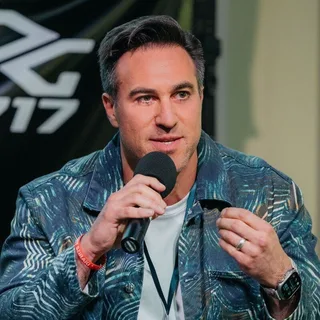
The creator in this case studyA New York CEO of a creator partnerships startup, and an exited media founder
Followers15,459
Posts
These numbers are from 3 November. Your audience has already moved.
New founders, executives and investors turn Hot every week and others go quiet. Run your free scan to see today’s version, with the names.
SellsAn app and a service that find creator partners for brands, reward them with earned equity, cash or a blend, and track results from first post to revenue
PeriodSep 25 – Nov 3
Ideal client: founders and marketing leaders of consumer brands who want creators as long-term partners, and the investors who back them.The challenge: The CEO wrote it a week after the app launch: “Millions of impressions is not success. Reaching hundreds of your target customers, that is freaking awesome.” Creators, agencies and creator economy peers react first. Which posts reach the founders, brand leaders and investors?
Key takeaways
2 in 5 readers is a founder, executive or investor.96 of the 250 people who reacted between 25 September and 3 November (38.4%): founders, CEOs, CMOs, VPs, partners and investors.
Posts about the company bring 2.2x the share of industry takes.OWM launches and calls: 43.4% founders, executives and investors. Industry takes and the newsletter roundup: 19.6%.
87 peers, 7 regulars.87 creators, agencies and creator economy peers reacted. 7 founders, executives and investors came back to 3 posts or more, and 1 to 5 or more.
01
Who actually reads you, and what the LinkedIn algorithm changed
The CEO posts about twice a week on building a creator partnerships company, events and panels, and where the creator economy is going: 13 posts between 25 September and 3 November, from the week before the app launch to a take on running 4,000 creators.
The LinkedIn algorithm shows a post first to the people closest to the author, then to people like them. For a creator economy founder, that first circle is full of creators, agencies and talent managers. Reach can’t tell them apart from the brands that buy. Who reacted can. We read the first 100 reactors on each post and sorted them by role.
13posts in 6 weeks
250people reacted
96founders, executives and investors
7came back 3+ times
Audience by roleThe 250 people who reacted, by roleFree
Founders, CEOs, CMOs, VPs, partners and investors96 · 38.4%
Creators, agencies, talent and creator economy peers87 · 34.8%
Everyone else67 · 26.8%
The peers are a large group: 87 creators, video editors, agencies, talent managers, LinkedIn growth specialists and creator economy consultants, plus the OWM team. They react fast and give each post its first push, but most of them sell to brands too.
The 96 founders, executives and investors are the readers that matter: CEOs of consumer and media companies, marketing and partnerships VPs, venture partners and angels. They are the brands that could put creators on their cap table, and the investors who could back them.
SeniorityAll people who reactedFree
Founder, owner, C-level39.6%
Director, VP11.2%
Manager4.8%
Independent6.4%
Other38%
IndustriesFounders, executives and investors onlyNetwarm
Media, entertainment, sports and creator businesses27.1%
Hidden in preview00%
Hidden in preview00%
Hidden in preview00%
See all industries and company sizes in your free scan.
Core audience7 founders, executives and investors engaged 3+ times · 1 engaged 5+ timesNetwarm
7 founders, executives and investors came back to 3 posts or more. One of them reacted to 5 of the 13.See your regulars
Engager company sizeEveryone who reacted, by company sizeNetwarm
Hidden in preview00%
Hidden in preview00%
Hidden in preview00%
Hidden in preview00%
Hidden in preview00%
See which company sizes your founders, executives and investors work at.See company sizes
02
What to post on LinkedIn to reach founders, executives and investors
A creator economy founder’s posts get reactions from the whole creator economy. The question is which posts also reach the brands and the investors.
We tagged each of the 13 posts by topic, then measured the share of founders, executives and investors among the people who reacted.
Your topicsWhat your 13 posts were aboutFree
13posts
Industry takes and roundups4
OWM launches and calls3
Founder journey3
Events and speaking3
Topics that attract founders, executives and investorsShare of each topic’s reactions from founders, executives and investorsNetwarm
OWM launches and calls43.4%
Founder journey32.4%
Events and speaking29.0%
Industry takes and roundups19.6%
One topic brings 2.2x more founders, executives and investors than another. See which.See which topics
Posts about OWM itself bring 2.2x the share of founders, executives and investors that industry takes do: 43.4% against 19.6%.
Posts that brought the most founders, executives and investorsShare of founders, executives and investors in each post’s reactions1 of 5 open
#1We just launched the first creator marketing app in your pocket49.5%
#2Why creators becoming founders matters to a room of marketers36.1%
#3I’ve told myself over and over again this is gonna work35.1%
#4Everyone at VidSummit is battling, and the 100 first fans32.5%
#520 creators is a relationship. 4,000 is a system.31.2%
For comparison, the newsletter roundup with six company stories in one post reached 1 founder, executive or investor in the 13 people we read (7.7%).
6 rules for LinkedIn engagement from founders, executives and investors
These rules come from what worked on the CEO’s own profile, and from the best-performing posts by creator economy founders, marketers and strategists on LinkedIn in the last 90 days.
1
Say what you built and who it’s for. A brand founder reacts when the post answers “is this for me?”. Name the problem, the customer and the product in the first lines, then the reason now.On this profile: OWM launches and calls brought 43.4% founders, executives and investors, the highest of the four topics. The app launch alone: 49.5%.
Tell the hard week, then the customer who showed up. Founders follow other founders through the messy part. Keep the struggle short and end on proof: a client signed, an investor who leaned in.On this profile: founder journey posts brought 32.4%, the second-best topic, and 11.3 founders, executives and investors per post.
One creator, one company, one number. A roundup spreads attention across six names. One story with one figure in the first two lines gives a brand founder something to repeat in a meeting.Across the niche: the Dime Lab story ($100 million valuation) drew 5,063 likes. On this profile: the six-story newsletter roundup reached 7.7%.
Take a side a brand can argue with. “The creator economy is evolving” gets nods. “A 60K creator can deliver more than a 600K creator” gets a marketing lead to answer. End with the question the brand has to decide.Across the niche: 744 likes and 547 comments. On this profile: the Viral Nation take that ends on a question to brands reached 31.2%, the best industry take.
Show the program from the inside, with its numbers. Brands buy a system, not a vision. How many creators, how they get paid, what it costs, what came back.Across the niche: a UGC program with 500 to 700 ads a month and creators paid 7% of ad spend drew 920 likes and 110 comments.
Write to the room you want to sell to. The same panel, written two ways: to brand marketers and investors (“they’re going to steal market share”), or about imposter syndrome. Only one of them reached the buyers.On this profile: the panel invite to marketers reached 36.1%, the imposter syndrome post about the same panel 13.3%.
When founders, executives and investors read: the best time to post on LinkedIn for creator marketing founders
We compared the share of founders, executives and investors by the day and the hour each post was published (Eastern Time). Only the 8:00, 10:00 and 16:00 slots had 3 posts or more. With 13 posts, read these as signals, not laws.
Share of founders, executives and investors by posting dayAmong the people who reacted to each postFree
42.5%
Mon
19.5%
Tue
30.5%
Thu
35.1%
Fri
27.8%
Sun
Best time to post, by hourShare of founders, executives and investors among people who reactedFree
26.9%
8:00
38.9%
10:00
31.3%
16:00
Monday’s 3 posts brought the highest share (42.5%), led by the app launch. Tuesday’s 3 posts were the lowest (19.5%). Thursday had the most posts (5) at 30.5%.
Keep about 2 posts a week, give Monday to the strongest post about OWM, use Thursday for the founder story or the take, and publish around 10:00 Eastern (38.9% over 5 posts).
05
5 posts ready to publish to target founders, executives and investors
Each post follows the rules above, in the CEO’s voice. Check every number and name with the team before posting: real deals and real figures are what make a brand founder stop scrolling.
1Ready to postProduct proof
Why a creator with equity posts differentlyRules 1 and 5: what OWM does, for whom, and how the deal works. Modelled on the app launch (49.5% founders, executives and investors).
Hook
A creator you pay per post stops talking about you when the check clears.That’s not a knock on creators. That’s the deal you offered them.When they own a piece of the business, it’s a different deal...They post when nobody asked.
They bring you the next creator.
They answer the DM from a customer at 11pm.
They talk about the company on a podcast you never booked.Because when they own it, they treat it differently.That’s what we built OWM (Creator Ownership) for:→ Find the creators who actually influence your customer
→ Reward them with earned equity, cash, or a blend
→ Track every post, from the first one to revenueAll in one app.Founders, if you could put one creator on your cap table tomorrow, who would it be?
Visual · Single imageA screen of the app on a phone, held in a hand, with the three steps (find, reward, track) as the only text.Check before postingMake sure the four behaviours match what you see with your own creator partners, and add one real example in the comments if a partner agrees to be named.
Cash, equity or both: the creator deal sheetRule 5 and the lead magnet: the deal from the inside, then the resource. Modelled on the influencer pricing doc (824 likes, 172 comments).
Hook
Cash, equity, or both? It’s the first question every founder asks me about creator deals.My answer... it depends on what you need from them.Cash works when you need reach this quarter. Clear deliverables, clear end date.Equity works when you need a partner for years. They earn it over time, they get paid when you win.A blend works for most brands. A little cash so they can say yes today, earned equity so they stay.The mistakes I see every week:1. Giving equity up front, with nothing to earn
2. Paying cash for a “partnership” and expecting a co-founder
3. No way to track what each creator actually drivesWe put the three deal types on one page: when to use each, what to offer, and what to track.Want it? Comment “OWNERS” and I’ll send it.
Visual · Single imageThe one-page deal sheet itself: three columns (cash, equity, blend), with “when to use it”, “what to offer” and “what to track” as rows.Check before postingPut your Netwarm Reveal link on the deal sheet to see which founders open it. Check the three mistakes against the deals your team really sees.
Six weeks after the launchRule 2: the hard part, then the customer who showed up. Modelled on the pre-launch post (35.1% founders, executives and investors).
Hook
Six weeks ago we launched. Here’s what nobody tells you about week six.The launch buzz is gone. The congrats DMs stopped. The impressions went back to normal.And that’s when the real customers show up.Not the people who liked the video. The ones who had the problem.The founder who wants a creator on the cap table before the next raise.
The brand that set a big creator budget and has no way to run it.
The creator who’s done with one-off posts and wants to own something.Nobody cares about what you’re doing until they have to. Then they care a lot.So was week six glamorous? Heck no.But it’s the first week I’d call it product market fit... almost.We’re still in the first inning. Now go build something.
Visual · Single imageA candid photo of the team at work, no logo, no text.Check before postingUse your real week: swap the three customers for the ones you actually spoke to, without naming them unless they agree.
Stop paying creators per postRule 4: a side a brand can argue with, and a question it has to answer. Modelled on the Viral Nation take (31.2%) and the 60K creator post (547 comments).
Hook
Pay-per-post is the most expensive way to work with creators.Not because creators charge too much. Because you start from zero every single time.New brief. New negotiation. New audience warming up to you. Then the check clears and they move on to the next brand.The brands I see winning do it differently...A small team of trusted talent at the top, who own a piece of what they promote.
An army of creators in the middle, who draft off their energy.
And a system behind it, so it runs at scale.Working with 20 creators is a relationship. Working with 4,000 is a system. You need both.So here’s my question for brand founders and CMOs:If your top creator stopped posting about you tomorrow, would your sales notice?
Visual · Text onlyNo image. Let the question carry the comments.Check before postingIf you add a figure on creator budgets, use a source you trust and name it in the comments.
The barber who raised $7 millionRule 3: one creator, one company, one number. Modelled on the Dime Lab story (5,063 likes) and the VicBlends item in the Owners Only newsletter.
Hook
He cut Obama and Tom Brady. Then he raised $7 million.VicBlends built an audience of more than 23 million people. Now he’s building BetterDays, with Joey Thomas from DUDE Wipes.That’s not an influencer deal. That’s a founding team.One side has the trust and attention of the customer.
The other side knows how to build a brand that sells.Both need each other.This is what I mean when I say those “people” you call creators are just entrepreneurs. No different than the operator who raises a $2M pre-seed from friends and family.If you’re starting a business, or thinking of investing in one, remember it’s all about customer acquisition.So either build in public, or find the creator co-founder who can.
Visual · Single imageA clean card with the two numbers, 23M and $7M, and the line “That’s a founding team.”Check before postingCheck the latest public figures on the raise and the audience before posting, and tag the founders only if you know them.
Free forever: unlimited scheduling through LinkedIn’s official API, with images, video and PDF carousels.
06
LinkedIn lead generation: lead magnets that work to target founders, executives and investors
Reactions show interest. A request shows intent. For a creator economy founder, a useful resource also shows which brands are working on their creator program right now.
In creator marketing, these formats work best:
Format 1The data docReal numbers brands can’t get elsewhere, like what creators charge per reel, with the full sheet sent to anyone who comments.
Format 2The workflow giveawayThe exact system a brand would pay an agency to run, given away in full: strategy, management, review, team structure.
Format 3The private communityA closed group where deals get shared, opened in batches, “comment to join”.
Our pick for you: “The creator deal sheet: cash, equity or a blend”Built from the three ways OWM already rewards creators (earned equity, cash, or a blend), on one page a founder can bring to the next creator call: when to use each, what to offer, what to track. Offer it at the end of post 2, with a Reveal link to see which founders open it.With a Reveal link, every person who downloads it is shown by name, with their role and how warm they are. Your first Reveal link is free.Create your free Reveal link
07
From reactions to clients
Content brings founders, executives and investors to the profile. It doesn’t say when to reach out. Most never comment, so they stay invisible, and a brand founder who reads every post about creator deals this month may have signed with an agency by next quarter.
On LinkedIn, the right moment to start a conversation is when someone keeps coming back. We call that Hot: 5 or more points over 90 days, where a reaction counts 1, a repost 2, a download or a reply 4. In this sample, 1 founder, executive or investor reacted to 5 posts or more.
Hot right now1 founders, executives and investors · not contacted yetNetwarm
1 founders, executives and investors are Hot. See who to message first.See who’s Hot
First messageAn opener for each Hot person, based on the posts they readNetwarm
Hi Dana, you’ve been reading our posts on creator deals for a few weeks. Are you working with creators as partners yet, or still per post?Hi Marcus, I saw you reacted to the post on cash vs equity. Is a creator on the cap table something you’re looking at?
A first line for each of them, ready to send.See the openers
Netwarm sends nothing for you. It tells you who and when, and you write the message. It also works inside Claude and ChatGPT: ask “Who’s Hot today?” and get the list.
08
FAQ
Posts about the company itself, with who it’s for and how it works, and founder stories that end on a customer. Here, OWM launches and calls brought 43.4% founders, executives and investors, against 19.6% for industry takes.
Here, Monday brought the highest share of founders, executives and investors (42.5%) and Tuesday the lowest (19.5%). Around 10:00 Eastern was the best slot (38.9% over 5 posts).
About 2 posts a week worked here: 13 posts in 6 weeks reached 96 founders, executives and investors. The topic changed the share more than the number of posts.
Look at who reacts, not how many. Group reactions by role, measure the share of buyers per post, and follow the people who keep coming back. A free Netwarm scan does this for you.
Yes. Netwarm only reads public reactions to your own posts. It never logs in as you, never asks for your password, and never messages anyone for you.
How we made this playbook
We read the public reactions on 13 posts published between 25 September and 3 November 2026, up to the first 100 people on each post, and sorted the 250 people by role. Comments were not counted, so engagement figures are a floor.
Niche rules come from top posts by creator economy founders, marketers and strategists on LinkedIn in the last 90 days. Role groups are approximate: many creator economy founders also sell to brands. A Netwarm scan matches people to your own ideal client.